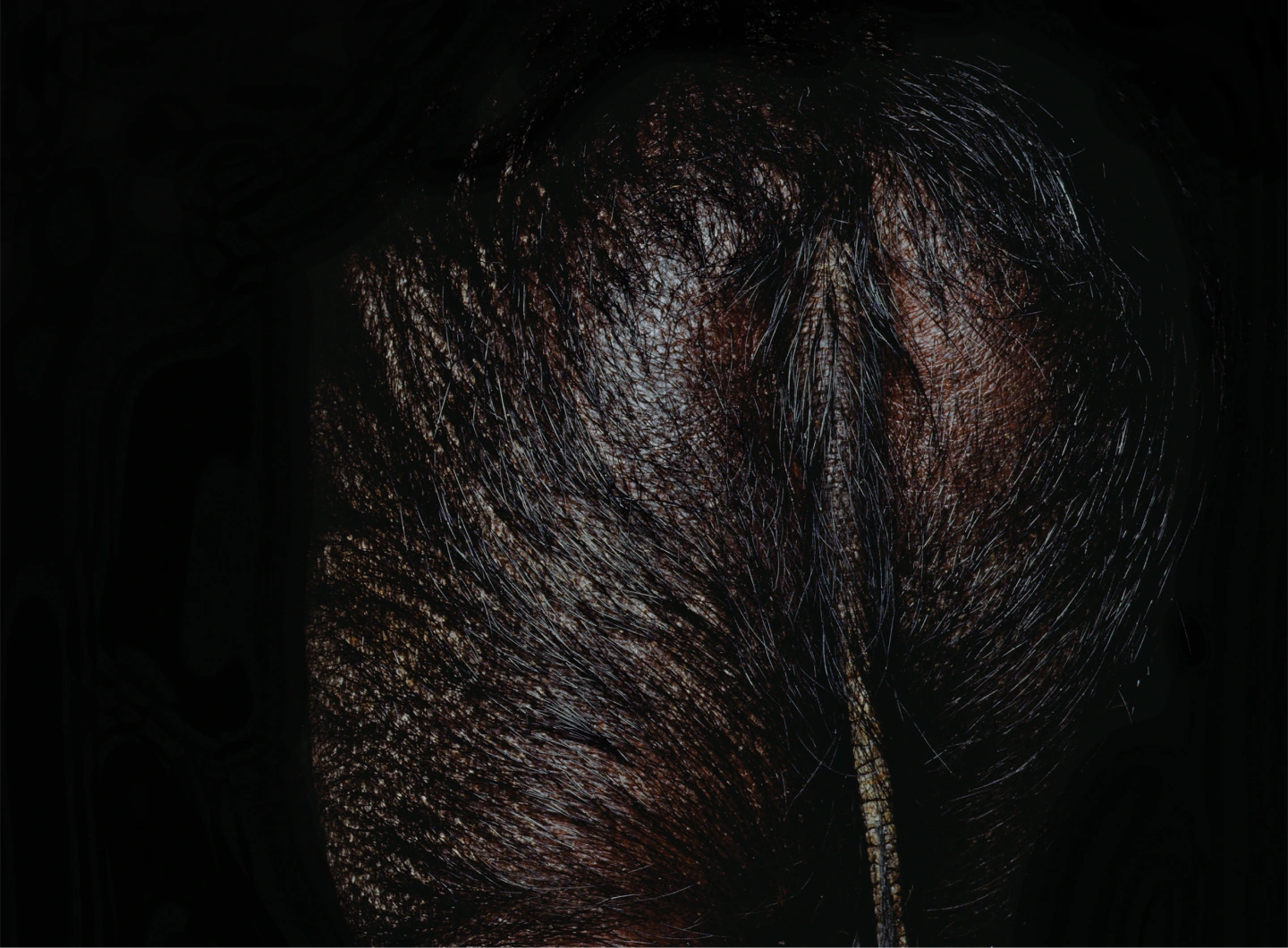
Communicating scents: Putting lipstick on a pig?
Published in LE MILE MAG and Scentury Mag: https://scentury.com/julia-ahtijainen/
A friend of mine, who hopes that one day I will change my field and stop wasting my talent and time, recently wrote to me: “I was thinking the other day that I really don’t like any perfume per se. All of them are just too damn strong. If they are supposed to enhance the person, they should never overpower them, but they always do. It’s like putting lipstick on a pig, but it’s still a pig.”
My friend accurately articulated the underlying anxiety I sometimes feel about my job. Communicating scents and perfumes is, after all, a strange and complicated field.
The Weird World of Scent Communications
Public relations and brand messaging sit in a bizarre purgatory. It exists somewhere between politics (where one must always remain polite and politically correct), babysitting (managing journalists while repeatedly explaining the importance of social media and press gifts to brand creators), and pure style. To succeed, you must look, sound, and act as a literal extension of the brand so you don’t lose loyalty points on either side of the business.
But how do we measure the results of these three competing roles? How do we quantify the blood, sweat, and tears invested in a few forced meetings and carefully polished words? Is it time wasted, or time beautifully invested?
Returning to my friend’s blunt expression: I am not a pig, and I generally dislike lipstick. Unfortunately for the PR industry, I am fiercely honest and direct. I also don’t particularly care for pigs or eating pork—unless it’s the mandatory slice of prosciutto crudo during a celebratory night out with my Italian friends.
The Semiotics of the “Dirty” and the Volatile
“Pig” is a word that carries an inherent smell. It is a heavy linguistic signifier packed with multiple cultural meanings, and certain religions ban it entirely. In his book L’Onesto Porco (“The Honest Pig”), Italian historian Roberto Finzi explores the animal from cultural, religious, and linguistic perspectives. Amusingly, the worst curse words in Italian always begin with the word porco, which also translates to “dirty.” Yet, despite the less-than-delightful smell of the slaughterhouse and the global rise of vegetarianism, most of the world still consumes pork.
Most animals only become “dirty” in our minds when we domesticate them; we accept them as they are when left in nature. In a domestic framework, everything transforms into a sign or a symbol. This realization opens a Pandora’s box of daily struggles for a semiotician trapped in product communications.
People have often accused me of being too opinionated in this line of work. Yet, if the word “perfume” originates from the Latin per fumus—meaning “through smoke”—our words naturally become volatile when communicating scents and perfumes.
To truly understand a phenomenon, a person, or a linguistic sign, we must categorize types and map out similarities and differences. We have to anchor the subject inside a structured framework so it cannot escape or fade away. When we discuss fragrance, there is no room for empty abstractions, plain delusions, or hollow expressions.
Aiming High in Fragrance Storytelling
Michelangelo allegedly wrote: “The greatest danger for all of us is not that our aim is too high and we miss it, but that it is too low and we reach it.”
We should always aim high. Communicating scents and perfumes effectively is a lot like leading the blind from a high peak. It requires leading them with genuine passion and absolute honesty. I am speaking about an artistic, truthful, and deeply humble way of translating outstanding liquid masterpieces into human language.
Applied semiotics functions as a creative act that elevates our communication. It sharpens our analytical frameworks to fit a specific purpose and maps them onto a real-world phenomenon. While a perfumer evaluates a scent based on quality, intensity, and duration of perceptibility, the storyteller treats the scent as a living entity. Capturing a fragrance in words requires the exact same imaginative effort that went into creating the juice itself.
A frustrated novelist probably lives inside every semiotician. To survive in this field, you must know how to write—but more importantly, you must know how to read. Reading is the ultimate technique for acquiring knowledge, sharpening insight, and honing critical skills. It allows us to compare subtle reworks, generic copies, and original masterpieces.
In this way, semiotic analysis feels less like marketing and more like detective work. It requires a willingness to be provocative. Semiotic theories serve as excellent hooks to hang our thinking on, and a deep knowledge of pop culture is not just a competitive advantage—it is vital for basic survival.
Navigating Our Chaotic Semiotic Environment
To decode the modern landscape, we have to understand the main characters driving our current semiotic environment:
- SPEED – Driven by rapid messages, instant feedback, information flow, rigorous execution, and real-time chronicles.
- CLUTTER – An explosion of competing ideas, content, books, music, events, and choices that demand pattern detection.
- UNPREDICTABILITY – Shifting definitions of accountability, structural flexibility, and constant cultural changes.
- DISTRACTION – Severe information overload that forces a constant battle for concentration and mindfulness.
- FRAGMENTATION – The rise of micro-niches, distinct subcultures, and the challenge of balancing the big picture with cultural sensitivity.
- IDEOLOGY – Navigating critical thinking alongside rapidly changing and competing worldviews.
The Primal Power of Olfactive Intuition
Once you wipe away the corporate lipstick and embrace this “dirty” way of analyzing fragrance, you realize the undeniable role of intuition.
Our sense of smell remains indisputably primal. Inextricably linked to memory, a scent sparks immediate neurological recall and emotional recognition. The archipallium (or archicortex) represents the most ancient part of our neuroanatomy—our primitive reptilian brain. Because of this raw connection, a perfume detective cannot complete a project without relying heavily on intuition.
One of the finest definitions of intuition belongs to legendary perfumer Edmond Roudnitska, who noted:
“Intuition is not a miracle; it is a flame which is sparked only if the necessary amounts of knowledge, experience, reflection, and meditation are available. Perfumery schooling calls for patience, attention, and perseverance.”